
CITADELS & FORTRESS
Description
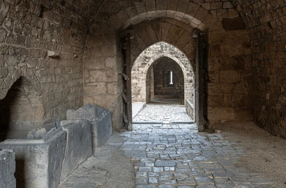
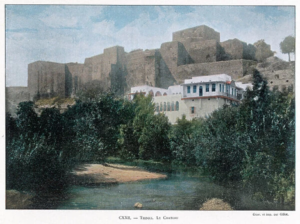 ers of Raymond of Saint-Gilles during the siege of Tripoli by the crusaders. The hill where the citadel stands had previously been the site of an 11th-century Fatimid cemetery and Army camp which the crusaders destroyed. It is a 12th-century fortress, however, very little of the original structure has survived, the castle having been rebuilt several times, and for the last time in the early 19th century, by the Ottoman governor of Tripoli Barbar Agha. It is now a museum for remains from the North region area.
During the Mamluk period, the governor rebuilt it incorporating Roman columns and other building material he found nearby. Many of the interior walls, ramps and terraces were built in his time, the entrance gate is typical Mamluk. WE know that the Mamluk troops had the custom of making a parade twice a week from the citadel to the Al Mina tower to make an inspection to the army and to examine the situation. They used to wear beautiful accessories and ornamented dresses when showing up. Tripoli had many labyrinths leading to the sea from the crusaders time, the army used to runaway if there is a danger of attacks.
The Ottoman sultan Suleiman the Magnificent restorated the citadel and commemorated this occasion by the following inscription: “In the name of Allah, it has been decreed by the royal sultan’s order, al Malik al-Muzuffar Sultan Suleiman Shah, son of Sultan Selim Shah, may his orders never cease to be obeyed by the emirs, that this blessed citadel be restored so as to be a fortified stronghold for all time. Its construction was completed in the blessed month of Sha’bân of the year 927 (July 1521)”. In the early 19th century, the citadel was extensively restored by the Ottoman governor of Tripoli Barbar Agha. Very little of the original Crusader structure has survived until this day.
Coin from Tripoli, 2nd century BCE (Museum Al Kalaa)
The citadel houses the North Lebanon & Akkar Museum. The small museum has a numismatic collection covering most periods from the Hellenic to the Ayyubid one.
Today, it hosts a museum of Remains from North Lebanon areas. It is still a very impressive structure where you can see Tripoli till the sea. Many myths and stories still are narrated by the grandmothers about the snake that used to come up every night to the citadel and nobody could ever catch it.